I have a habit of telling myself that “it’s just toothpaste.”
When you live in a city like Gurgaon or Bengaluru, the convenience of quick commerce is intoxicating. It isn’t just about the toothpaste, of course. It’s the packet of peanuts because I’m feeling peckish, the extra bottle of cold coffee, or the pack of incense sticks I didn’t know I needed until I saw the “frequently bought” section.
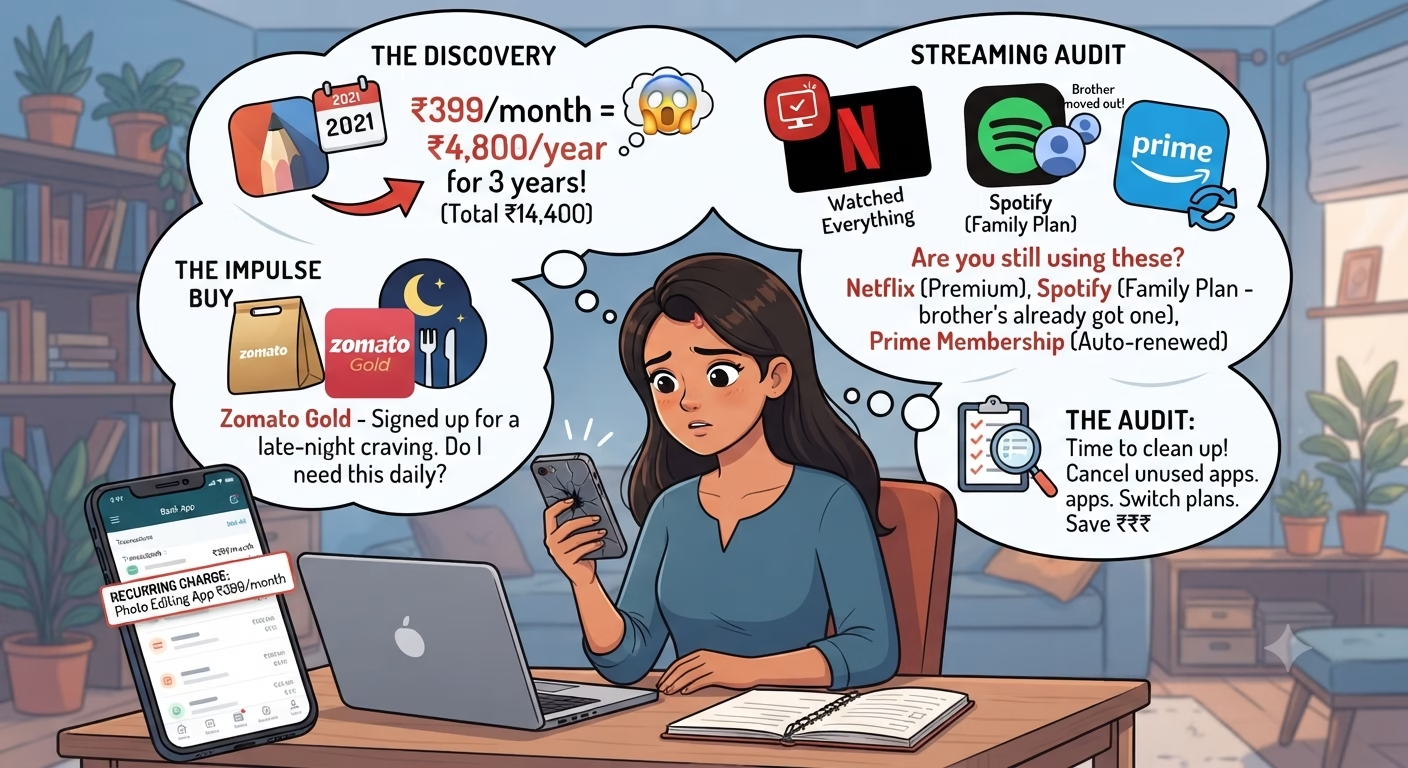
Last week, I finally pulled my bank statement for the last thirty days. I filtered for the app name and did the math. I had placed 53 orders in a single month.
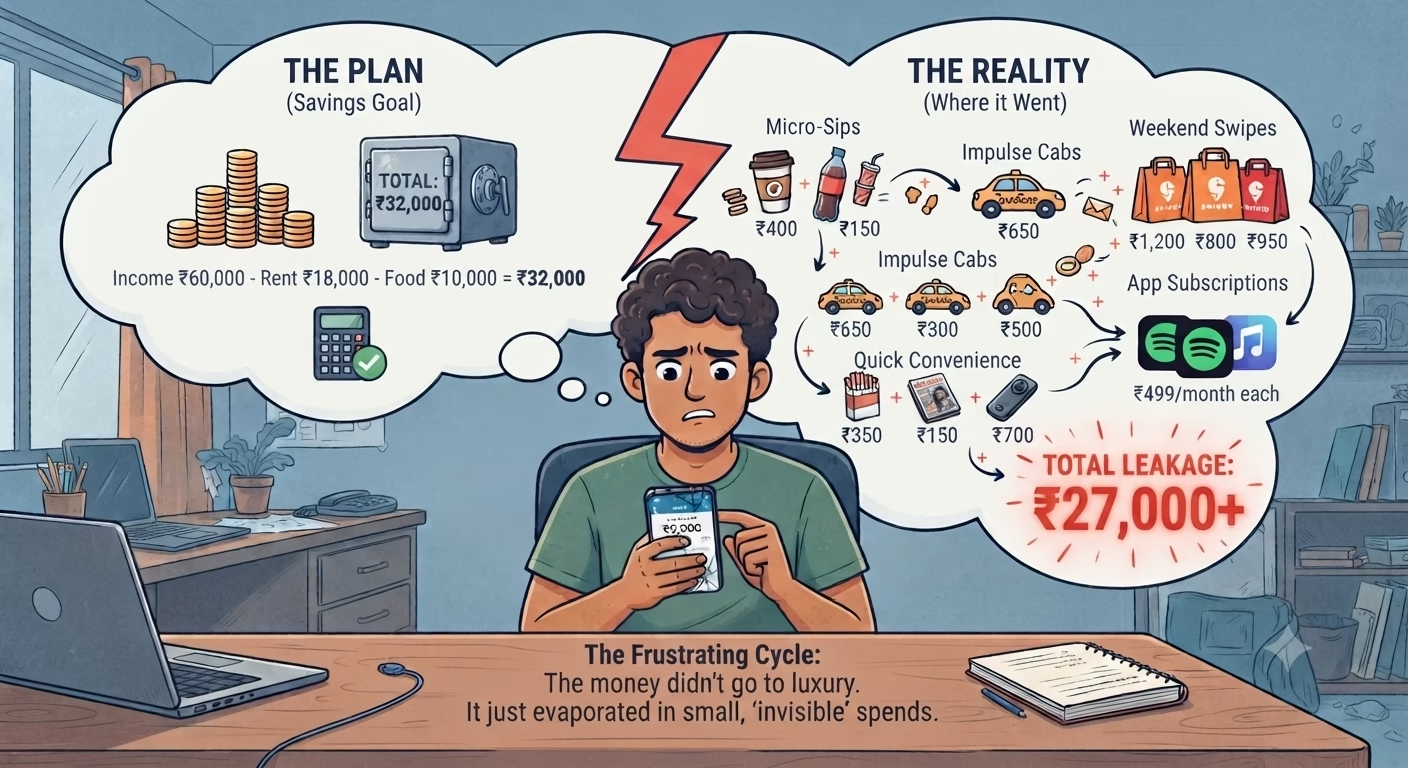
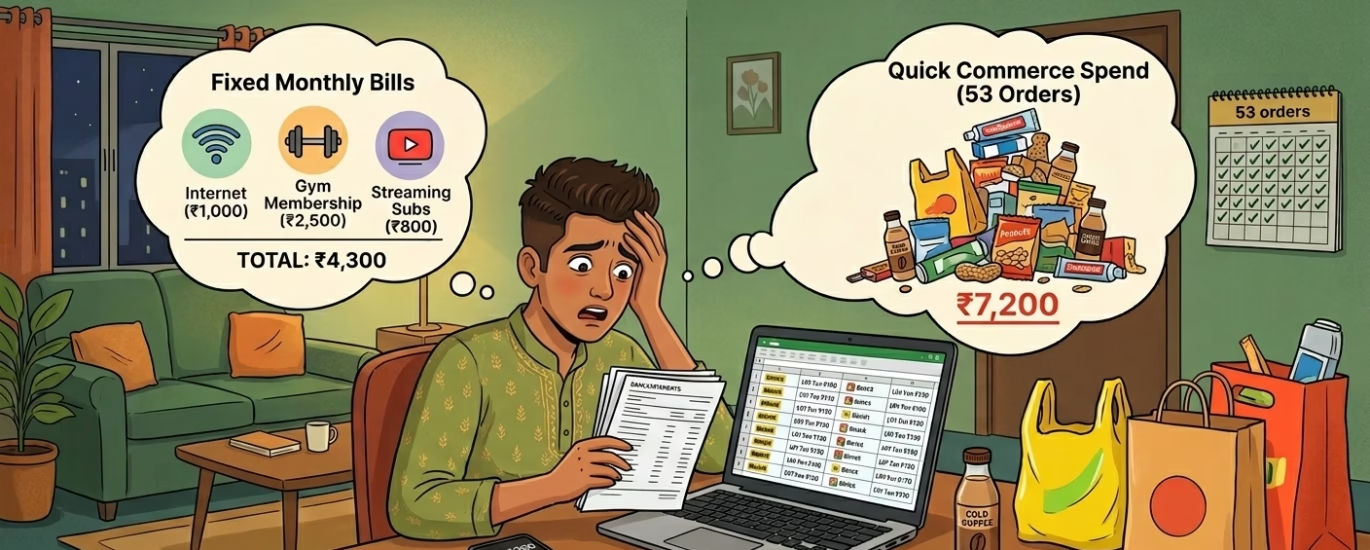
At first, I thought it was a rounding error. Then, I looked at the totals. The average order was small—maybe ₹130 to ₹150. But when you add up 53 of those small UPI transactions, the number hits you in the gut. ₹7,200. That is more than my monthly internet bill, my gym membership, and my streaming subscriptions combined.
The psychology of small spends
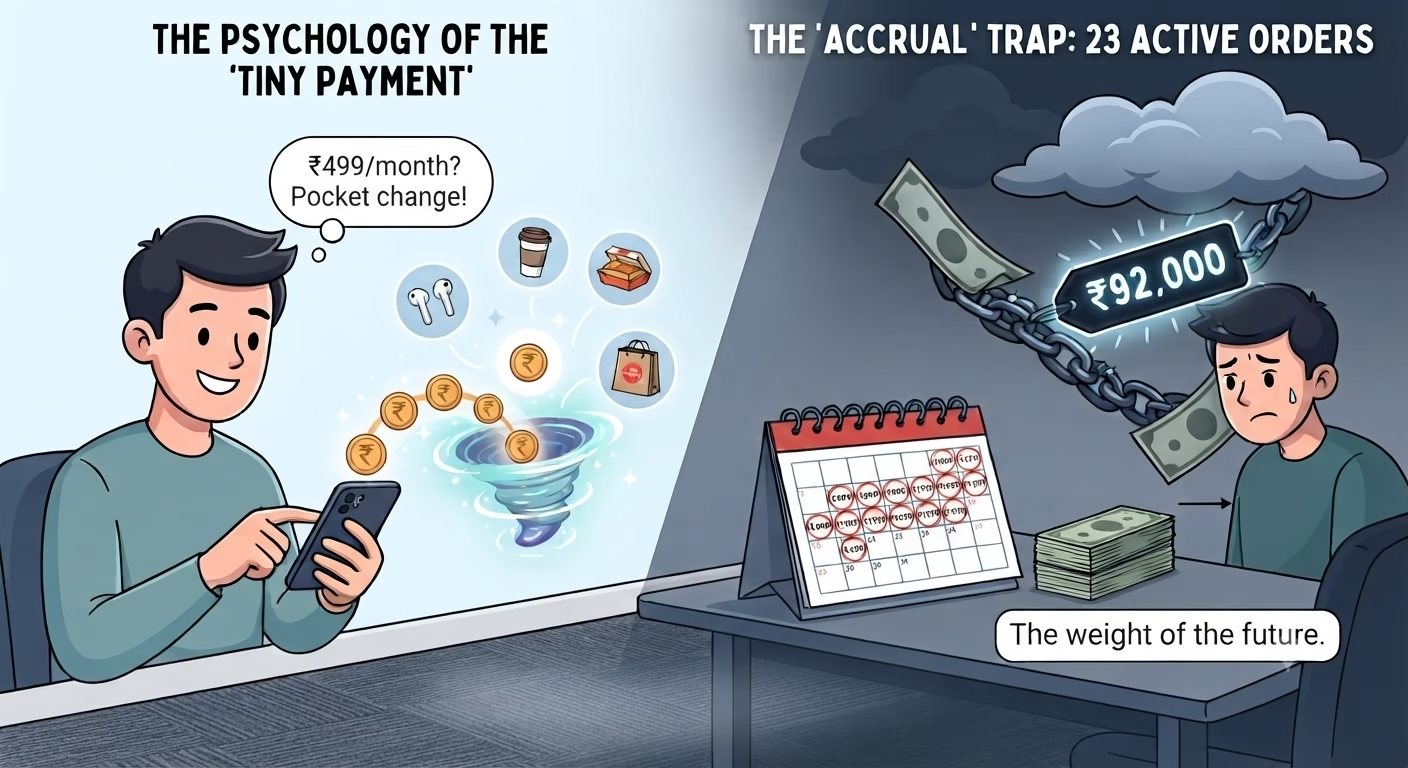
Why didn’t I notice? Because quick commerce apps are designed to make spending feel invisible. When the order amount is small, your brain doesn’t register it as a “purchase.” It feels like a minor adjustment, a micro-transaction that doesn’t require the same mental friction as a big shopping spree.
We justify these spends by framing them as “necessities.” Toothpaste, milk, bread—these are essential items. But the delivery fees, the platform surcharges, and the impulse add-ons are not. I wasn’t just buying groceries; I was paying a premium for my own lack of planning.
The friction of convenience
The danger lies in how effortless it is to spend money today. With saved cards and one-tap UPI payments, the gap between “I need this” and “I have paid for this” is virtually zero.
When you don’t feel the pinch of the money leaving your account, you lose your internal compass for what things actually cost. I was effectively paying a “convenience tax” that amounted to nearly ten percent of my monthly discretionary income. That isn’t just money gone—that’s a missed investment or a trip I didn’t take because I “didn’t have the budget.”
How to stop the invisible bleed
I decided to run an experiment. I didn’t delete the app, because let’s be honest—I’m probably going to use it again. Instead, I decided to start tracking every single transaction immediately, no matter how small.
Most finance apps fail because they require you to link your bank account, which feels invasive and often gives you a retrospective view of your mistakes. I wanted something more intentional. I started using Expenzey because it forces me to manually log the spend the moment I tap “pay.”
There is a distinct, grounding feeling when you have to type “₹140” into a simple interface. That thirty seconds of effort creates a moment of reflection. Did I really need those extra biscuits, or was I just bored and waiting for my coffee?
Build a buffer through awareness
You don’t have to become a minimalist or stop using technology. You just need to restore the friction that digital payments removed.
When you start tracking your small, daily habits manually, you start to see patterns. I noticed that 60% of my Blinkit orders happened between 4:00 PM and 6:00 PM. That’s when my energy dips, and I’m looking for a distraction. Knowing this allows me to prepare—maybe I keep some dry snacks at my desk so I’m not tempted to open the app for a quick fix.
Awareness isn’t about shaming yourself for the ₹7,200. It’s about realizing that you have the power to redirect that money toward things that actually move the needle in your life.
Why privacy matters in tracking
A lot of the apps I tried previously wanted access to my SMS and bank logins. They promised to “automate” my finances, but they really just created a digital trail of my spending habits that was sold to advertisers.
That felt wrong to me. Your financial data is deeply personal. I chose Expenzey because it’s privacy-first and doesn’t want my bank credentials. It’s just me and my numbers. It’s a tool for awareness, not a data-mining operation. When you feel safe with your tracking app, you’re much more likely to keep using it consistently.
The takeaway: move from reactive to active
You don’t need to cut out every luxury. You just need to stop the unconscious leaks.
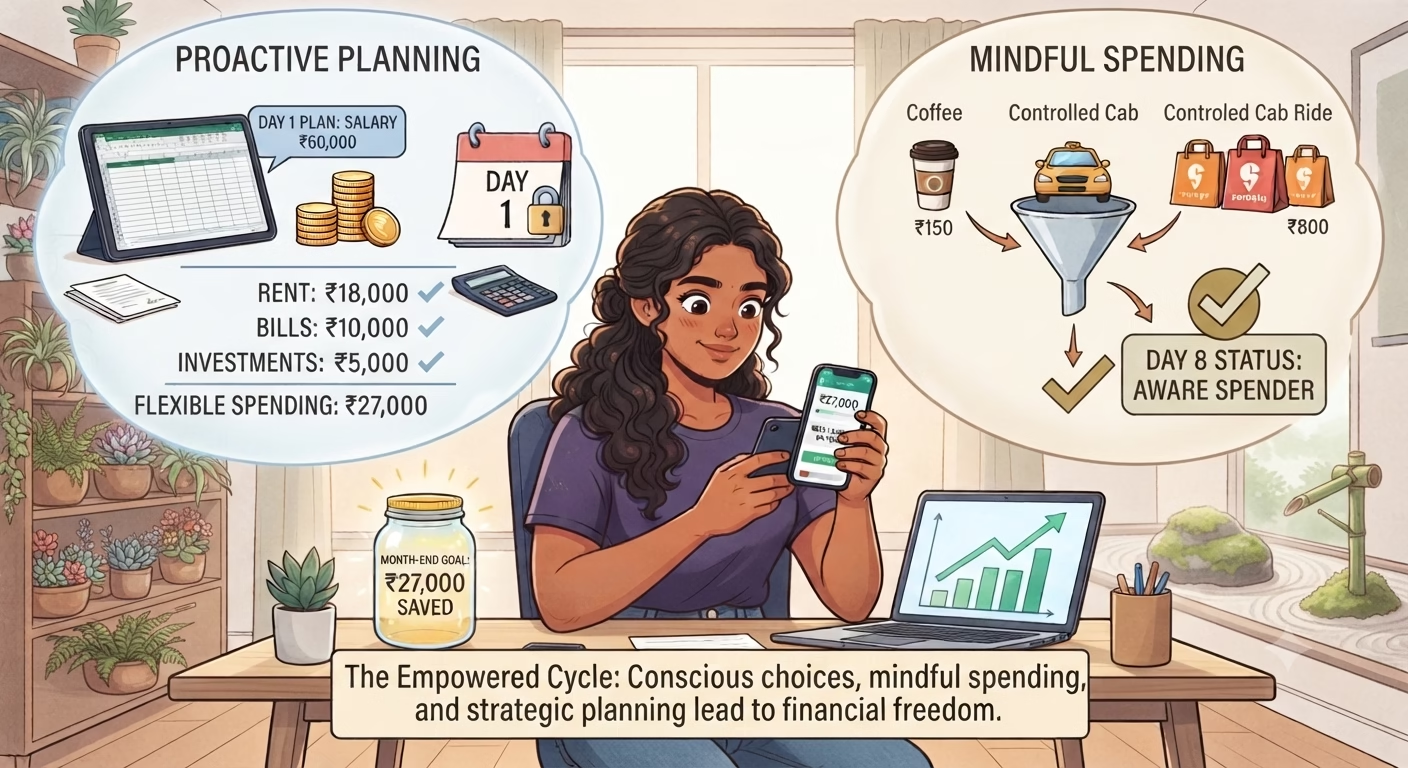
Try this for the next week: every time you order something small, pause for five seconds. Log the expense in a simple tool like Expenzey before you even check your order status. You’ll find that half the time, you might just cancel the order.
The goal isn’t to be perfect. The goal is to move from being a passenger in your financial life to being the driver. If you can save ₹7,000 a month just by becoming mindful of your “toothpaste orders,” imagine what you could do with that money over a year.
That is nearly ₹86,000. That’s not just groceries—that’s a flight to somewhere new, a new laptop, or a solid chunk of an emergency fund. It’s worth the thirty seconds it takes to log.