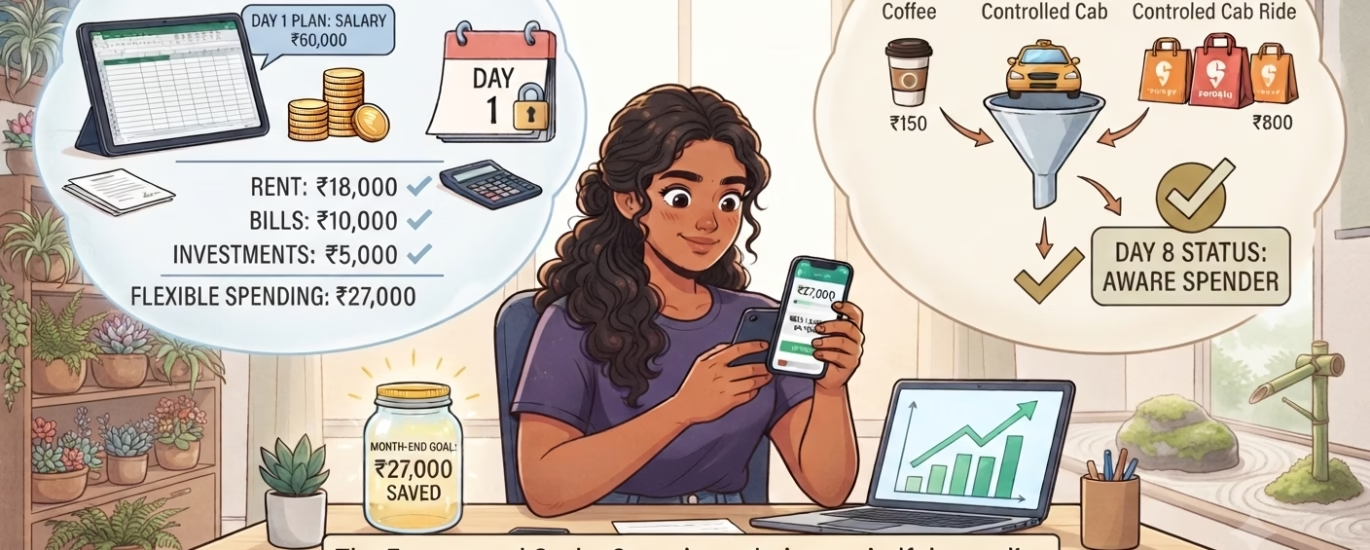
It starts with a notification. The bank app pings, and suddenly, your account balance looks like a respectable, life-changing number. You pay the rent, clear the credit card bill, and transfer some money to your investment account. You feel responsible. You feel stable.
Then, the slide begins.
By day 8, you are staring at your UPI balance, wondering how a “solid” month turned into a series of panicked micro-transactions. If you’ve ever felt like your money is leaking out of a sieve, you aren’t alone. Let’s look at how that first week actually plays out.
The “rich” feeling trap
On day 1, you have a psychological buffer. Because the account looks healthy, your brain stops treating spending like a trade-off. You convince yourself that a slightly more expensive lunch or an impulsive subscription to a new streaming service “doesn’t really matter” because there is still plenty left.
This is where the trouble begins. We tend to spend based on the feeling of abundance rather than the reality of our fixed costs. When we feel rich, we loosen our internal guardrails, and that is usually the start of the decline.
The death by a thousand notifications
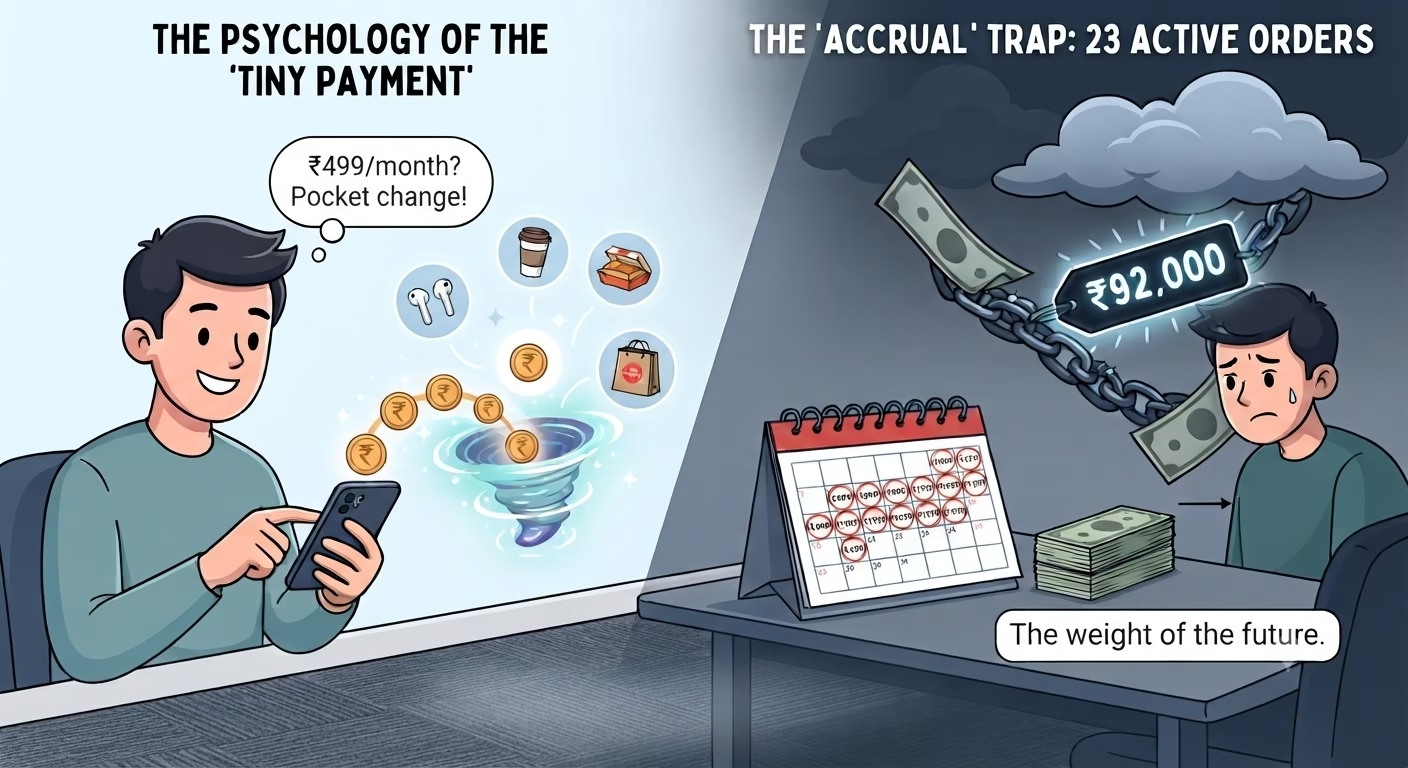
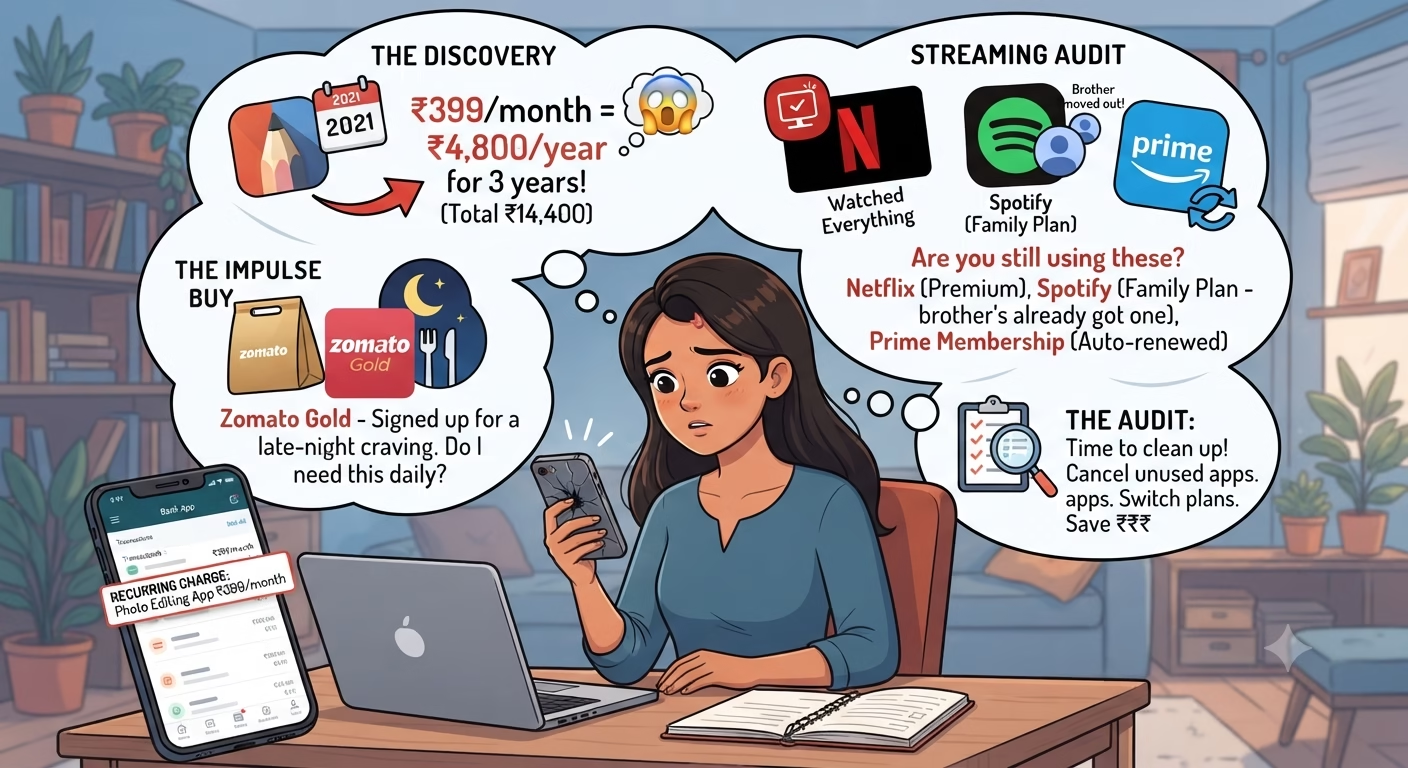
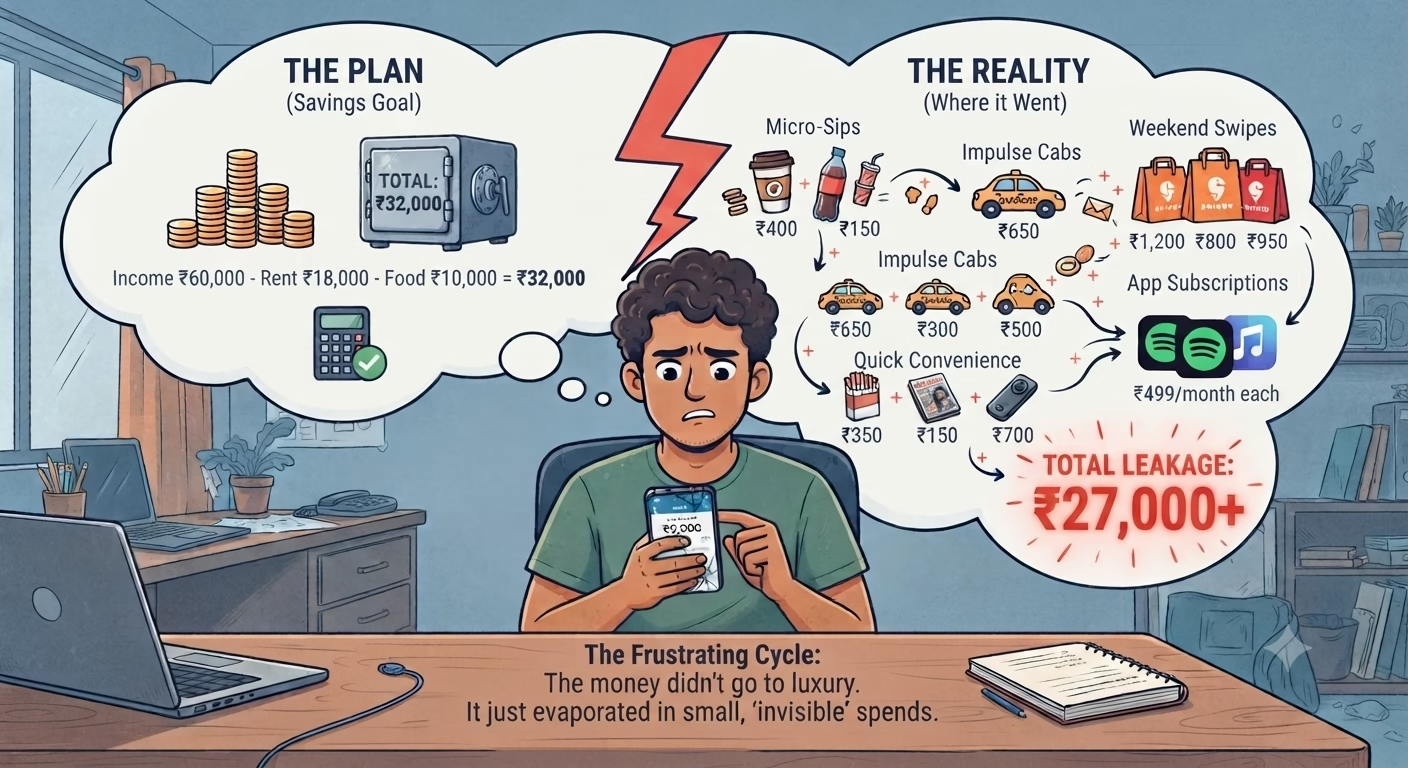
By day 3, the small stuff starts hitting. It isn’t the big purchases that kill your budget; it’s the friction-less nature of modern convenience. A Swiggy order here, an auto-ride there, and that ₹299 monthly membership that you forgot to cancel.
These aren’t big expenses, so your brain doesn’t flag them as “spending.” They feel like “lifestyle maintenance.” But these small, unrecorded numbers act like termites. They eat away at your balance without you noticing until there is nothing structural left to hold your budget together.
The mid-week retail therapy
By day 5, the initial excitement of payday wears off, and the actual work week hits hard. If you had a rough meeting or a long commute, your brain starts looking for a dopamine hit.
It’s easy to justify a small purchase—a new gadget accessory, a slightly overpriced coffee, or clothes you don’t strictly need—as a “reward” for working hard. But a reward system that relies on constant spending is a fast track to being broke. You’re trading your future peace of mind for 10 minutes of satisfaction.
Why we don’t track until it’s too late
Most people avoid looking at their bank app by day 7. We have this strange fear that if we don’t look at the number, the money isn’t technically “gone.” We prefer the comfort of ignorance over the reality of our bank statement.
At Expenzey, we believe that the moment you stop looking is the exact moment you lose control. If you aren’t logging your expenses in real-time, you’re flying blind. Manual tracking isn’t about being a miser; it’s about acknowledging the reality of your choices so that you don’t wake up on day 8 asking, “where did it go?”
The crash landing on day 8
By day 8, the reality hits. You check your UPI app at a checkout counter, and suddenly, the “insufficient funds” or the “decline” notification turns your day upside down. The anxiety is immediate. You start reviewing your transaction history, feeling a mix of regret and confusion.
The problem isn’t usually that you aren’t making enough; it’s that you have no visibility into the velocity of your spending. You’ve been spending at the speed of light, but your brain has been operating at the speed of a calculator from the 90s.
Building a better habit
You don’t need a complex finance degree to fix this. You need a system that removes the shame and adds a layer of mindfulness.
Start by recording every single expense, no matter how small. When you have to manually enter a transaction into an app like Expenzey, it forces you to pause. That tiny pause is the difference between an impulsive “yes” and a conscious “no.” You don’t need a rigid, 50-page spreadsheet that you’ll abandon in three days. You need a clean, simple space where you can see your money flow in real-time.
The takeaway
If you find yourself constantly hitting the “I’m broke” wall by the end of the first week, stop looking at your salary as a lump sum and start looking at it as a series of daily choices.
Privacy-first tracking isn’t about the bank tracking your data; it’s about you tracking your own behavior. Use a tool like Expenzey to label your spending, keep it simple, and remove the mystery. Take back your day 8, and make it look just as calm as your day 1.