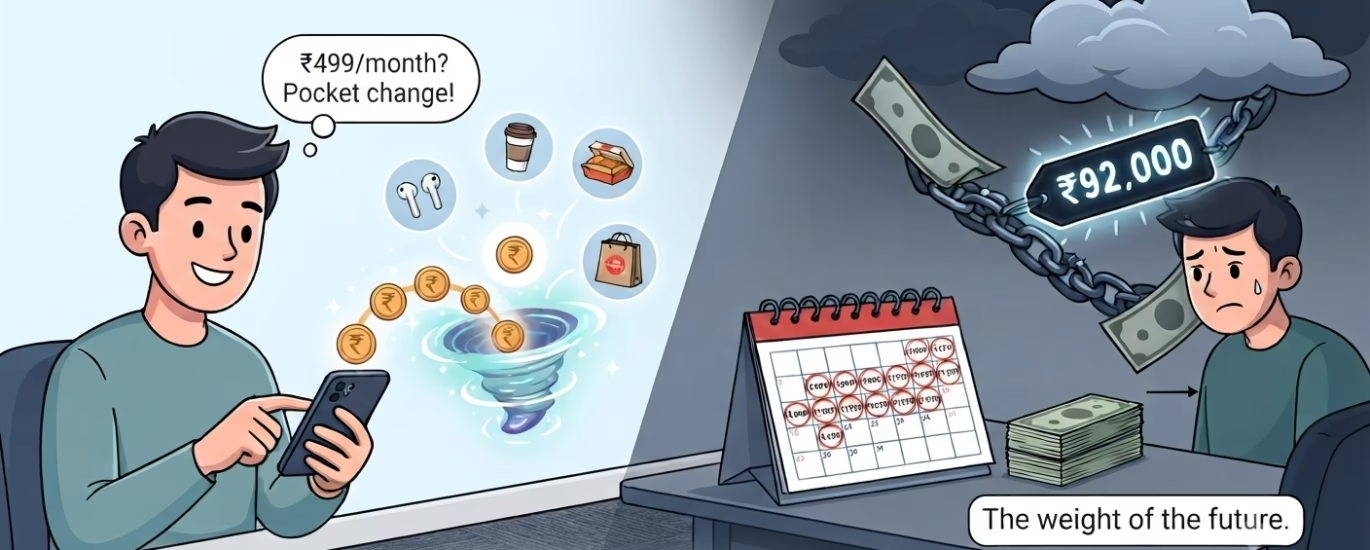
It started with a pair of wireless earbuds. They were on sale, and the checkout page offered a “split into 4 payments” option. ₹499 per month for four months sounded like pocket change. It felt like I wasn’t even spending money; I was just allocating a tiny fraction of my future salary.
That was four months ago. Today, that one casual click has snowballed into a tangled mess of 23 active orders. My bank balance is fine, but my “future self” is currently staring at a debt trap of ₹92,000.
Here is how a series of small, “painless” purchases turned into a quiet financial crisis.
the psychology of the “tiny payment”
The problem with services like buy now pay later (BNPL) isn’t the interest—it’s the math. Our brains are not wired to track fragments of money. When you see a price tag of ₹2,000, you mentally weigh it against your monthly budget. But when that same item is presented as ₹499, the friction of spending vanishes.
It feels like a discount on your own willpower. You tell yourself, “it’s just one coffee’s worth of money.” The danger happens when you repeat that narrative 20 times across Swiggy, Amazon, and fashion apps. You aren’t buying things; you are buying the illusion that these items are free for the next thirty days.
the “accrual” trap
My mistake was assuming that because each payment was small, they wouldn’t overlap. But bills don’t care about your convenience.
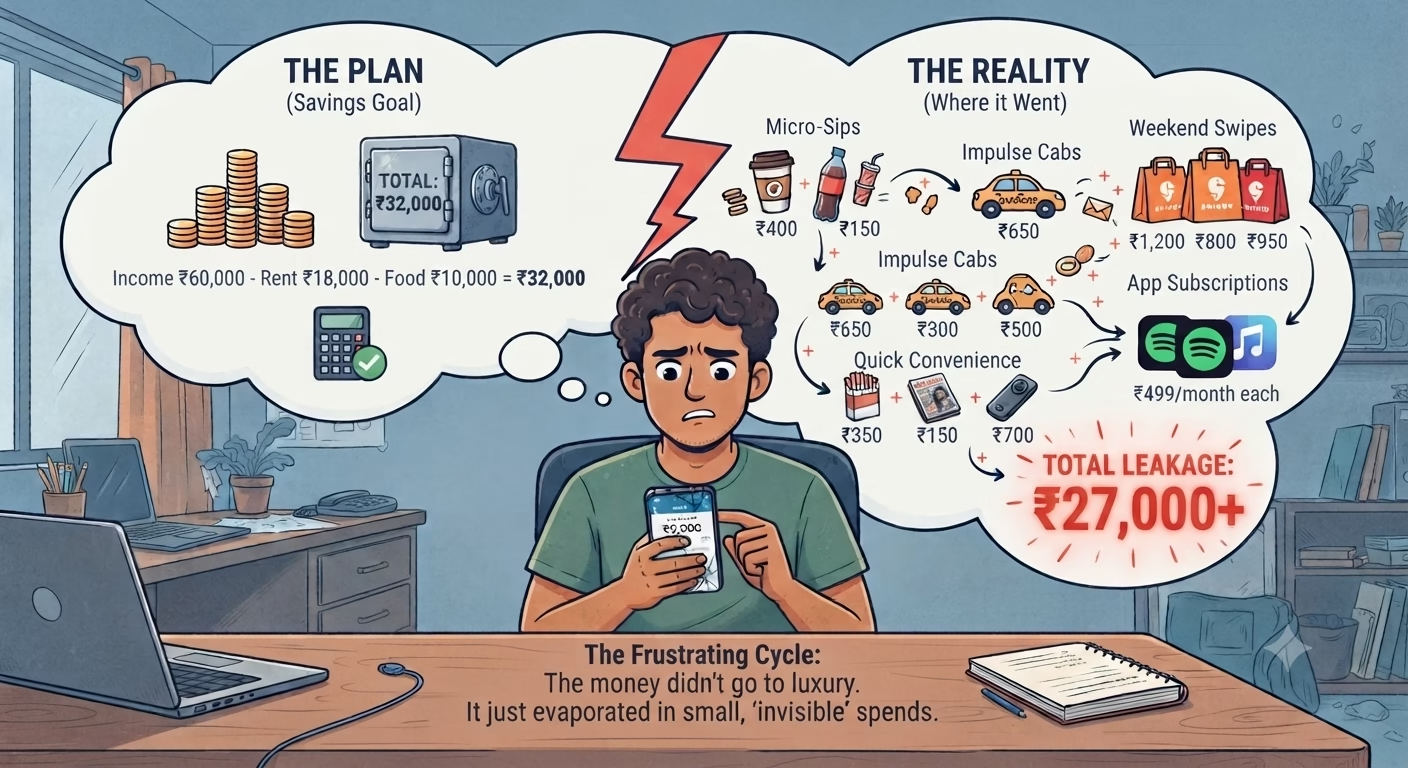
By month three, my recurring payments started clustering. I wasn’t just paying for the earbuds anymore. I was paying for a desk lamp, a streaming subscription, three fast-food orders, and a pair of sneakers. Suddenly, my “tiny” payments were collectively hitting my account on the same day as my rent and utility bills.
The money I thought I was “saving” by splitting payments actually vanished into the void of daily expenses. I wasn’t wealthier; I was just living on credit without realizing the scale of it.
why tracking becomes a burden
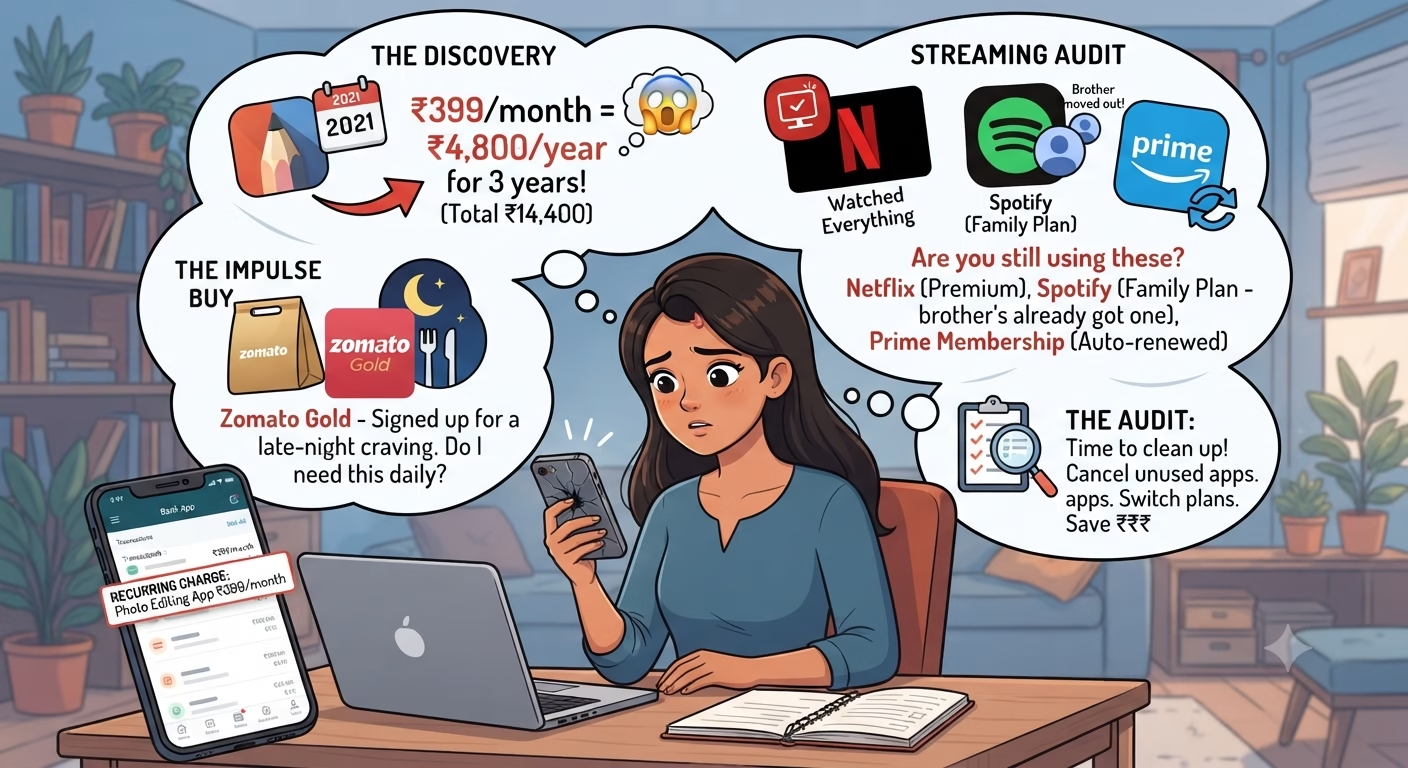
When I tried to clean up this mess, I looked at my bank statements. It was a disaster. Because these payments are processed through various third-party gateways, my statement looked like a random assortment of codes and brand names.
Most finance apps tried to “auto-categorize” my spending, but they couldn’t distinguish between a one-time purchase and a recurring payment obligation. It felt like I was being judged by an algorithm that didn’t understand the context of my life. That is when I started using Expenzey. I needed a way to log these things manually—not because I wanted to obsess over every rupee, but because I needed the friction of typing it out to actually feel the weight of what I was doing.
the power of manual friction
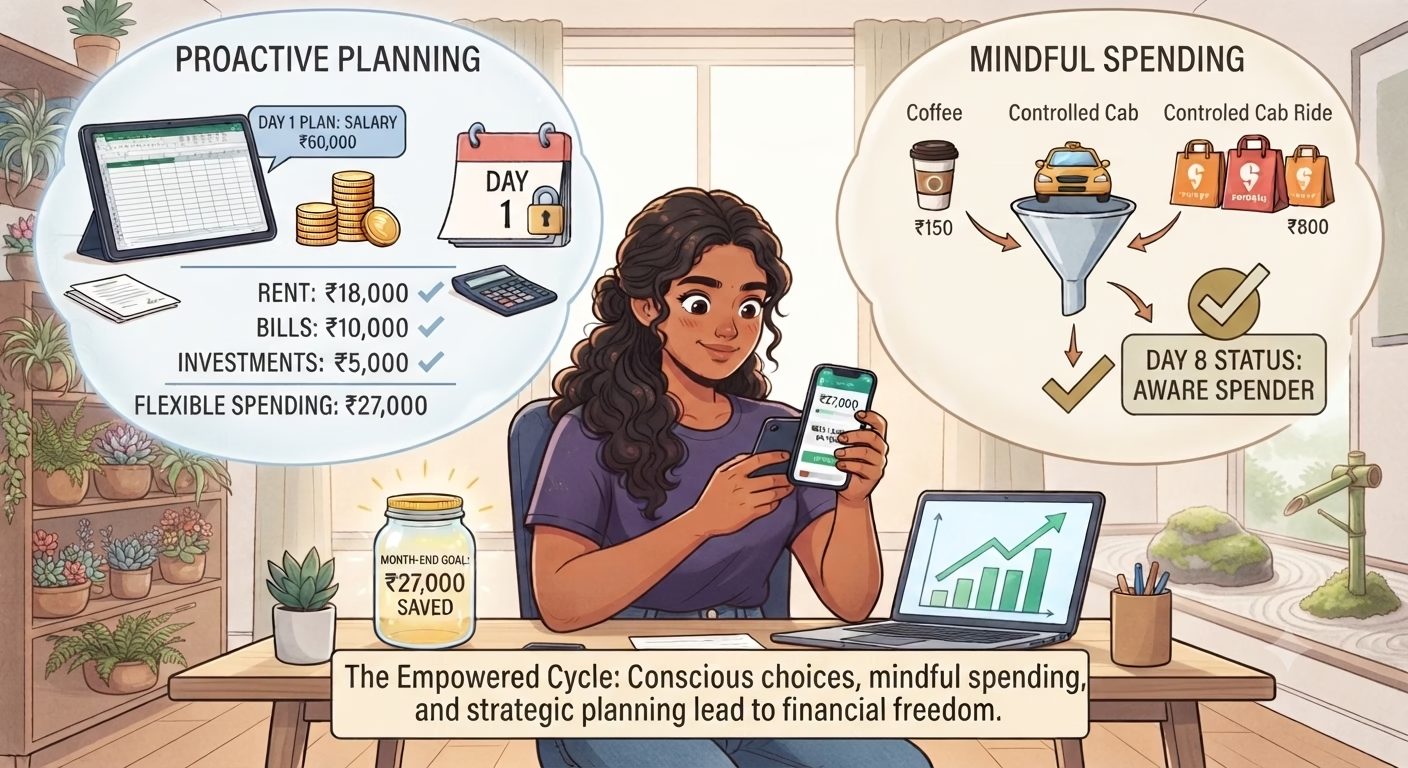
There is a specific kind of accountability that comes from manual entry. When I have to open Expenzey and label a purchase, I can’t hide from the fact that I’ve bought four unnecessary items this week.
When you automate your spending, you disconnect from your money. By forcing myself to log these BNPL payments manually, I started seeing a pattern. Most of my debt wasn’t for essentials; it was for things I bought during mid-month boredom or late-night scrolling. The act of recording the transaction in Expenzey acts as a speed bump for my brain.
stopping the cycle
The first step toward fixing my ₹92,000 debt wasn’t a complex budget spreadsheet. It was a moratorium on new BNPL transactions. I deleted the stored payment links from my browser and forced myself to use a debit card or UPI for every transaction, no matter how small.
If I can’t afford to pay the full price of an item today, I don’t buy it. It sounds simple, but it’s the only way to break the cycle. I’ve started treating “small” purchases as full-price ones, which makes me think twice before clicking “buy.”
how to manage your own “split” payments
If you are already deep into the BNPL trap, don’t panic. You don’t need a massive lifestyle overhaul. Just start with awareness:
1. List every active order: Spend ten minutes today looking at your active payment plans. Write down the total outstanding amount. Seeing the big number is the first step to reality.
2. Stop the new orders: Delete your BNPL account links. Make yourself wait 24 hours before buying anything non-essential.
3. Track for awareness: Start using a simple, private tool like Expenzey to log your expenses. Don’t worry about complex budgeting. Just focus on seeing the flow of money in and out.
4. Attack the debt: Treat your outstanding BNPL balance like a high-priority bill. Throw any extra income toward these balances until they are zero.
the takeaway
Your money should be a tool that gives you freedom, not a series of monthly obligations that anchor you to the past. The ₹92,000 I owed wasn’t just money—it was my future income that I had already spent.
By switching to manual tracking, I’ve reclaimed my decision-making power. I still buy things, but I own them the moment I pay for them. And that is a much better feeling than owing ₹499, four times over, for something I’ve already forgotten.