
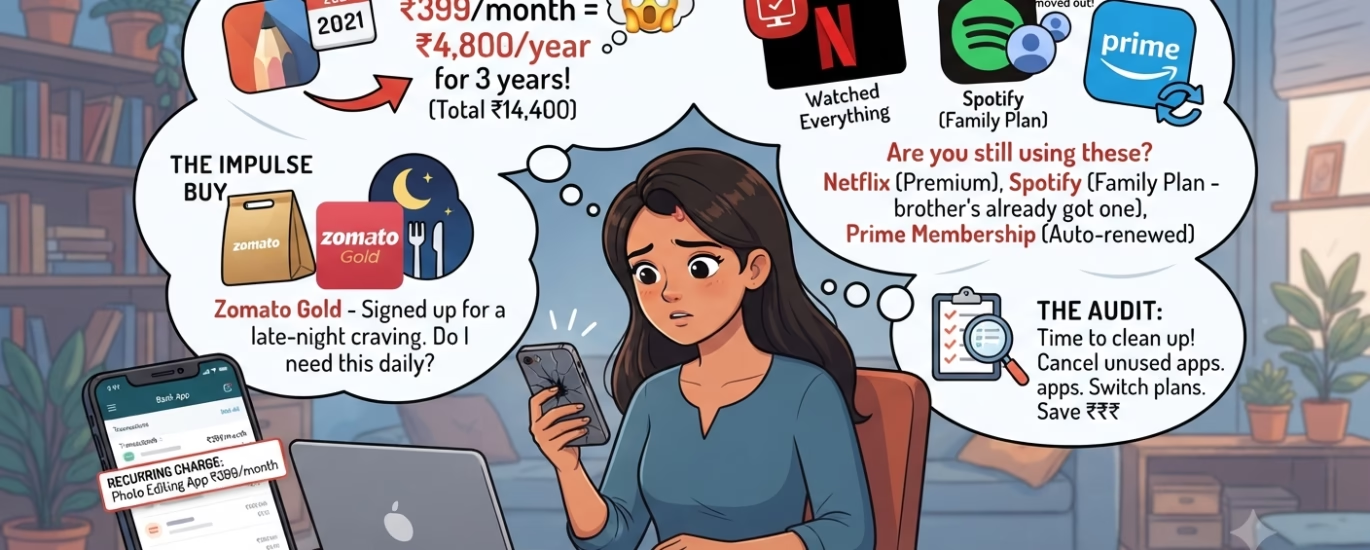
I was checking my bank statement last Sunday, looking for a duplicate UPI transaction from a Swiggy order, when I stumbled upon a recurring charge I didn’t recognize. It was for a photo editing app I downloaded three years ago for a single project.
I did the math. ₹399 a month. That’s nearly ₹4,800 a year for something I haven’t opened since 2021.
Then, curiosity turned into an audit. I checked my Netflix, the Spotify family plan I’m still paying for despite my brother having his own account now, a Prime membership that renewed automatically, and that Zomato Gold subscription I signed up for during a late-night craving.
By the time I finished, the number hit me: ₹14,000. That’s not just a subscription fee; that’s a weekend getaway or a decent pair of noise-canceling headphones just vanishing into the digital ether every single year.
the psychology of the “invisible drain”
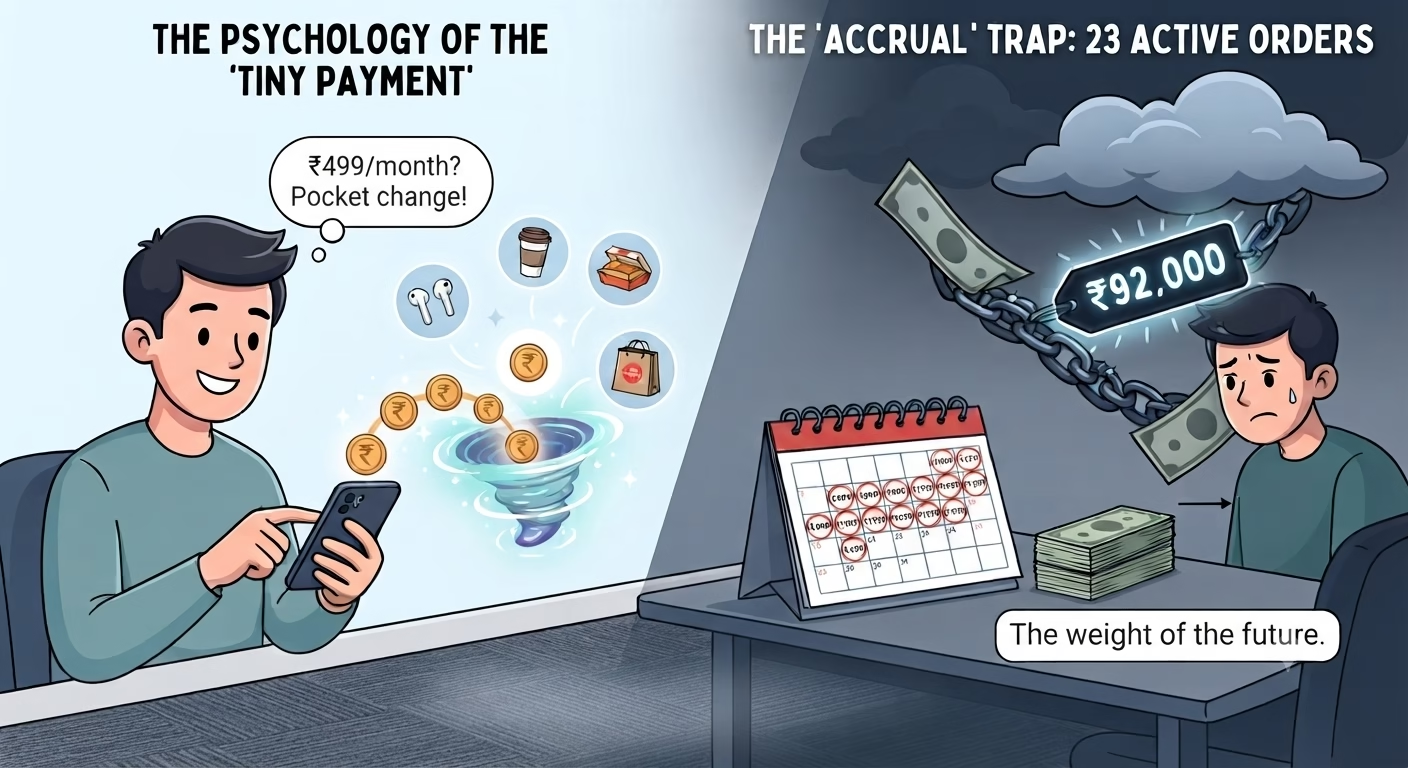
We love the “subscribe and forget” model because it’s convenient. But that convenience is designed to bypass our critical thinking. When you swipe a card for a coffee, you feel the weight of that expense. When a subscription renews via an automated mandate, you don’t feel anything.
This is what I call the invisible drain. It’s not one big purchase that hurts; it’s the quiet erosion of your balance. Because these amounts are small—₹199 here, ₹499 there—our brains don’t categorize them as “spending.” We categorize them as “utility.” And that’s where the trap is.
why we forget to cancel
The friction required to cancel a subscription is usually higher than the friction required to pay for it. Apps make signing up a one-click process, but unsubscribing often involves hunting through obscure settings menus or navigating “are you sure you want to go?” pages.
We procrastinate. We tell ourselves, “I might use it next month,” or “I’ll deal with it on the weekend.” The weekend comes, and we have better things to do than manage our app store subscriptions. So, we let it ride for another month. Then another.
the manual awareness approach
I realized that the only way to stop this is to bring the “pain” of the expense back to the surface. Automation is great for bills like electricity, but it’s dangerous for discretionary lifestyle apps.
I started tracking my spending manually. Every time I get a notification for a subscription renewal, I don’t just ignore it. I take 10 seconds to log it into Expenzey. The act of manually recording the expense forces me to acknowledge it. It’s a small, frictionless check-in that turns an invisible charge into a conscious decision.
audit your digital footprint today
If you want to find your own ₹14,000 leak, start by looking at these three places:
1. Your app store settings: Go to the subscriptions tab in the Apple App Store or Google Play Store. You will be shocked by what is still active.
2. Your UPI mandate list: Check your banking app for active auto-pay mandates. Many people have old streaming services or app subscriptions still linked to their UPI ID.
3. Your credit card statement: Look for recurring charges. Sometimes these aren’t even apps—they are “free trials” that converted into annual plans without a notification.
stop being a passive consumer
The goal isn’t to live a life without apps. Streaming, food delivery, and music services make life easier. The goal is to make sure you are the one deciding to pay for them every single month.
If you aren’t using an app at least once a week, cancel it. You can always resubscribe later in 30 seconds if you actually need it again. Taking that proactive step puts the power back in your hands instead of the app developer’s.
build a habit of noticing
I’ve found that using Expenzey for this has been a game-changer because it doesn’t try to “manage” my money for me with complex algorithms. It just makes me look at what I’m actually doing.
When you track your expenses manually, you build a relationship with your money. You start noticing patterns. You realize that you’re paying for three different platforms that all provide essentially the same content. You notice that the Zomato Gold benefits aren’t actually covering the cost of the subscription based on your order frequency.
your takeaway for this week
You don’t need a complex financial plan to save money. You just need to see where it’s leaking.
Pick one evening this week. Sit down with your last three months of bank statements. Find those recurring charges. If you haven’t opened the app in the last 30 days, unsubscribe. It’s not about being cheap; it’s about being intentional.
Your bank balance—and your peace of mind—will thank you for it.


I do not even understand how I ended up here, but I assumed this publish used to be great
Very well presented. Every quote was awesome and thanks for sharing the content. Keep sharing and keep motivating others.