
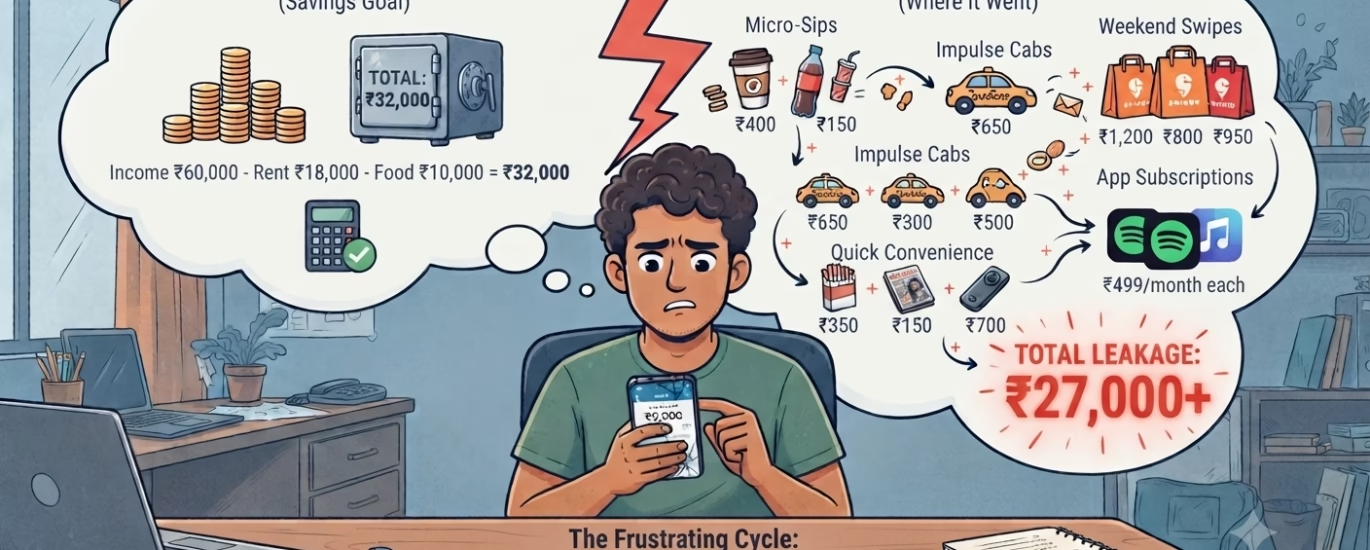
You open your bank app, expecting to see a healthy balance, but the number staring back at you feels wrong. You earn ₹60,000 every month. Your rent is ₹18,000, and you budget about ₹10,000 for food. By all accounts, you should have a solid ₹32,000 sitting in your account as savings.
But you don’t. You’re lucky if you have ₹5,000 left by the 25th.
It’s a frustrating cycle. You aren’t living a luxury lifestyle, and you aren’t buying expensive gadgets every week. Yet, the money evaporates. Let’s look at where that “missing” ₹32,000 actually goes.
The phantom costs of convenience
We live in an age of frictionless spending. When you earn a decent salary, you stop thinking about the cost of a single cup of coffee or a delivery fee because, on paper, you can afford it.
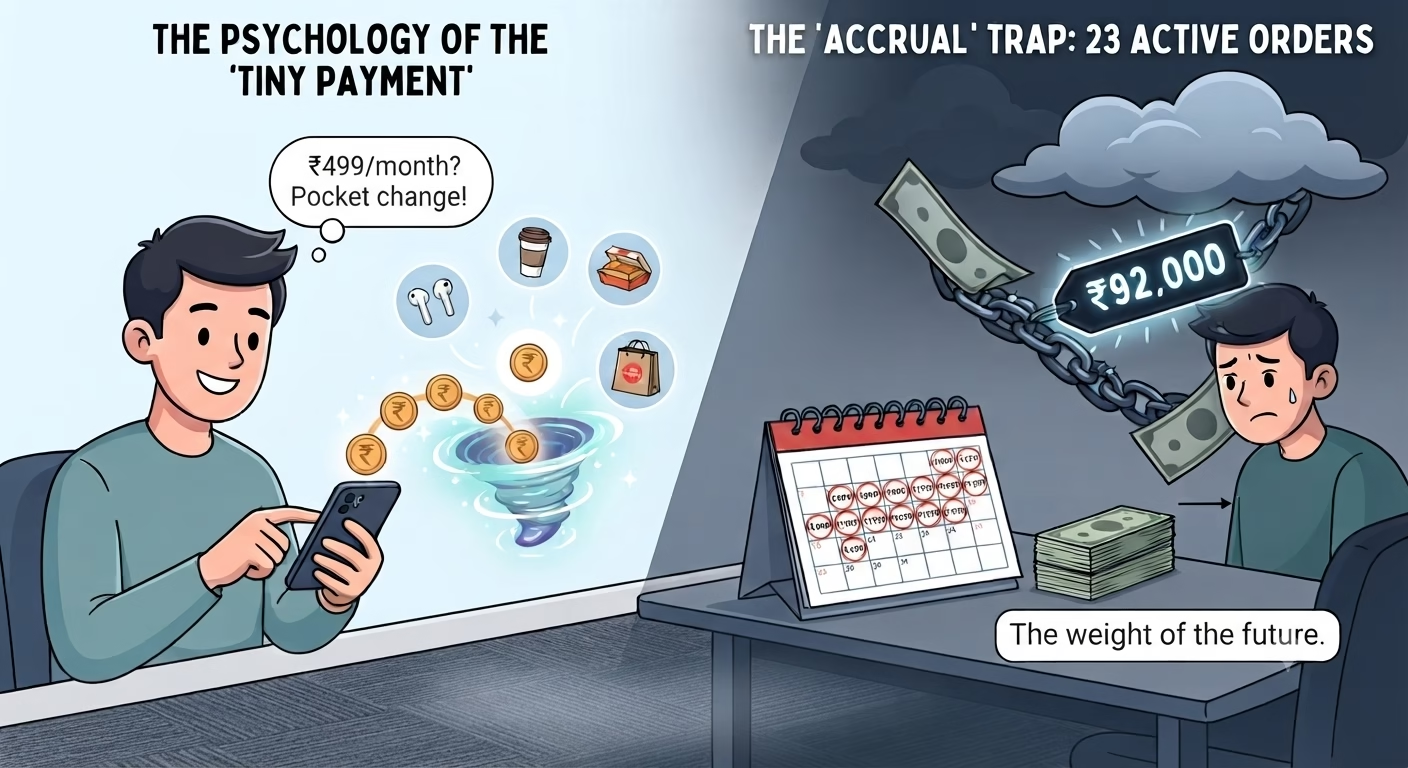
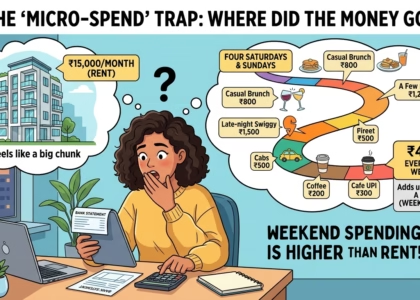
Those ₹50 delivery charges on Zomato or Swiggy seem insignificant. That monthly subscription to a streaming service you barely watch is just a small auto-debit. But these aren’t isolated events. They are leaks. When you don’t track your spending, your brain views these small transactions as “free” or “negligible,” but they accumulate into a massive, invisible expense that eats into your savings.
The trap of ‘lifestyle inflation’
When your income increases, your subconscious mind automatically upgrades your standards. Maybe you started taking cabs instead of the metro because it’s “just a bit more comfortable.” Maybe you started buying premium grocery brands or grabbing a snack every time you pass a cafe.
This is lifestyle inflation, and it happens so quietly you don’t even notice. You feel like you’re living on ₹30,000, but your habits have shifted to match your ₹60,000 income. You’ve expanded your spending to fill the space available, which is why your savings remain stagnant regardless of your salary hike.
Why your memory is a terrible accountant
Most of us try to track our finances in our heads. We think, “I spent some on food, some on transport, and a bit on shopping.” The problem? Human memory is biased. We tend to remember the big purchases and completely forget the dozen small UPI transactions we made throughout the day.
If you don’t log what you spend, you don’t see the patterns. You don’t realize you spent ₹6,000 on “incidental” expenses—cabs, snacks, coffee, and impulse buys—until it’s already gone. Awareness is the first step toward control. This is why using a simple, manual tool like Expenzey can change your perspective. When you take five seconds to type in an expense, you force your brain to acknowledge the outflow.
The psychology of ‘invisible’ money
UPI has revolutionized how we pay, but it has also disconnected us from the reality of spending. When you hand over physical cash, you feel the weight of it leaving your wallet. When you tap your phone to pay via UPI, it feels like clicking a button.
This psychological distance makes it way too easy to overspend. You aren’t “spending money”; you’re just “completing a transaction.” To bridge this gap, you need to bring manual consciousness back into your financial life. Using an app like Expenzey helps because it isn’t an automated tracker that just syncs with your bank. It requires your input, which keeps you grounded in your actual spending reality.
Are you paying for forgotten things?
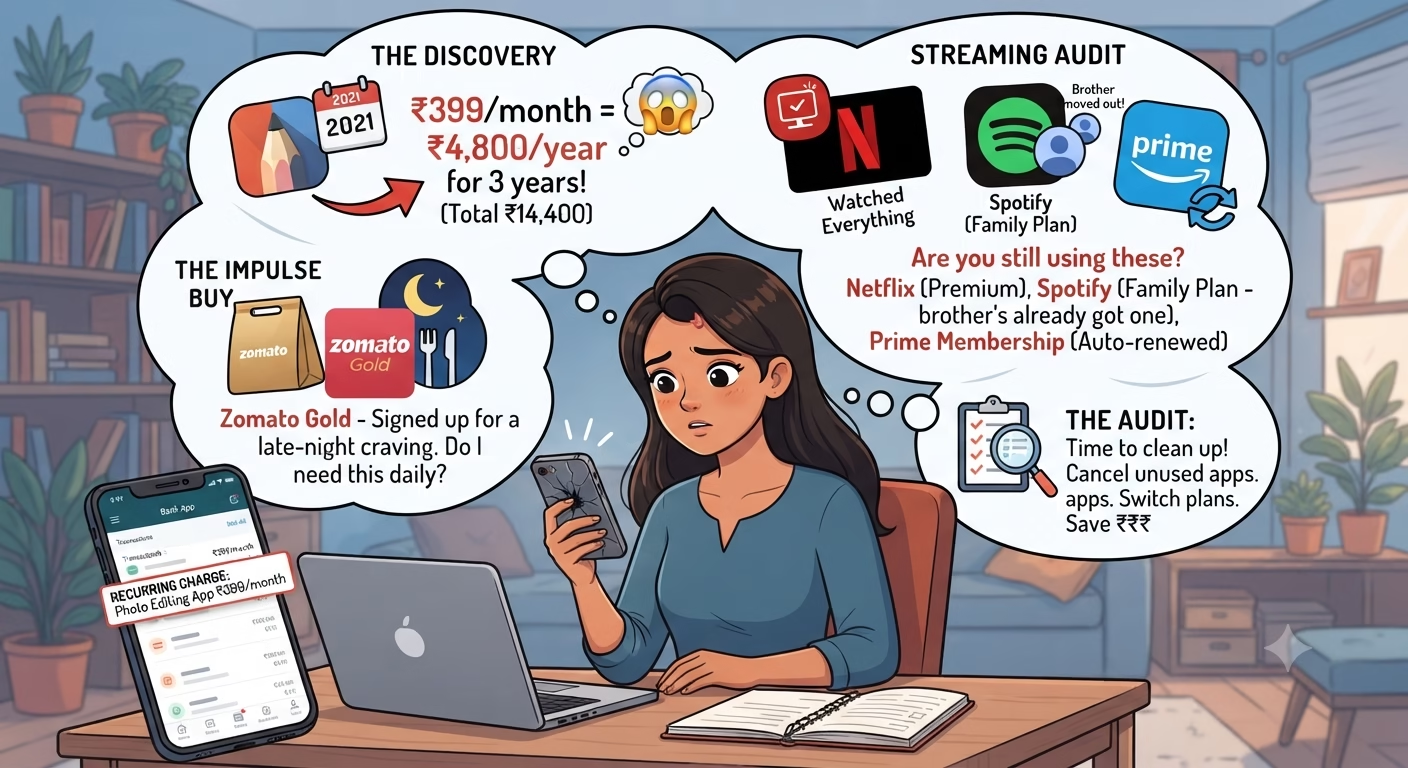
Go through your bank statement for the last three months. I guarantee you will find at least one or two things you’re paying for that you don’t use. A forgotten app subscription, a gym membership you stopped visiting, or a recurring service you signed up for once.
These small, recurring automated payments are the silent killers of your savings. They don’t require your permission to leave your account each month. If you aren’t auditing your finances, these ghosts continue to haunt your bank balance indefinitely.
Creating a reality-based system
You don’t need a complex spreadsheet or a finance degree to fix this. You just need a system that fits your lifestyle.
Instead of obsessing over rigid categories like “food” or “entertainment,” try using labels that reflect your actual life. Maybe tag things as “essential,” “convenience,” or “joy.” When you see your spending labeled as “convenience,” it becomes much easier to identify where you can cut back without feeling like you’re depriving yourself of a good life.
Expenzey is built around this idea. It’s private, it’s intentional, and it’s designed for people who want to understand their habits rather than just look at charts that tell them they’re failing.
The road to keeping your 32k
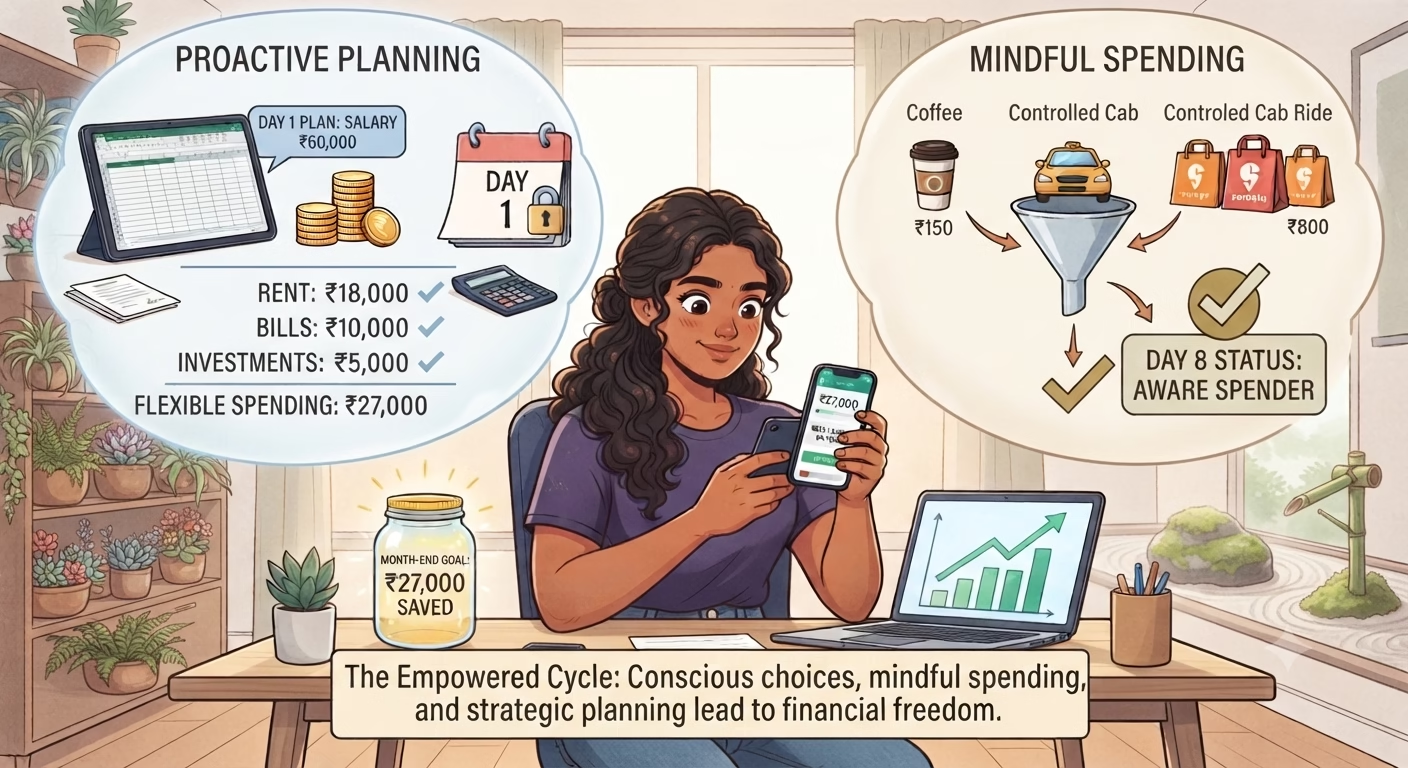
If you want that ₹32,000 to stay in your account, stop treating it like a “remainder” and start treating it like a “priority.”
1. Track for a month: Don’t change your habits yet. Just record every single rupee you spend for 30 days.
2. Identify the leaks: Look for those frequent, small transactions that don’t bring you any long-term happiness.
3. Audit the recurring: Cancel the subscriptions and services that you haven’t touched in 60 days.
4. Use friction: Make yourself pause before you click ‘pay’ on a non-essential item.
You earn enough. The issue isn’t your income; it’s the lack of visibility into your own life. Once you start tracking with intention, that “missing” money will stop disappearing into the ether and start accumulating where it belongs: in your savings.


I just wanted to drop by and say how much I appreciate your blog. Your writing style is both engaging and informative, making it a pleasure to read. Looking forward to your future posts!