
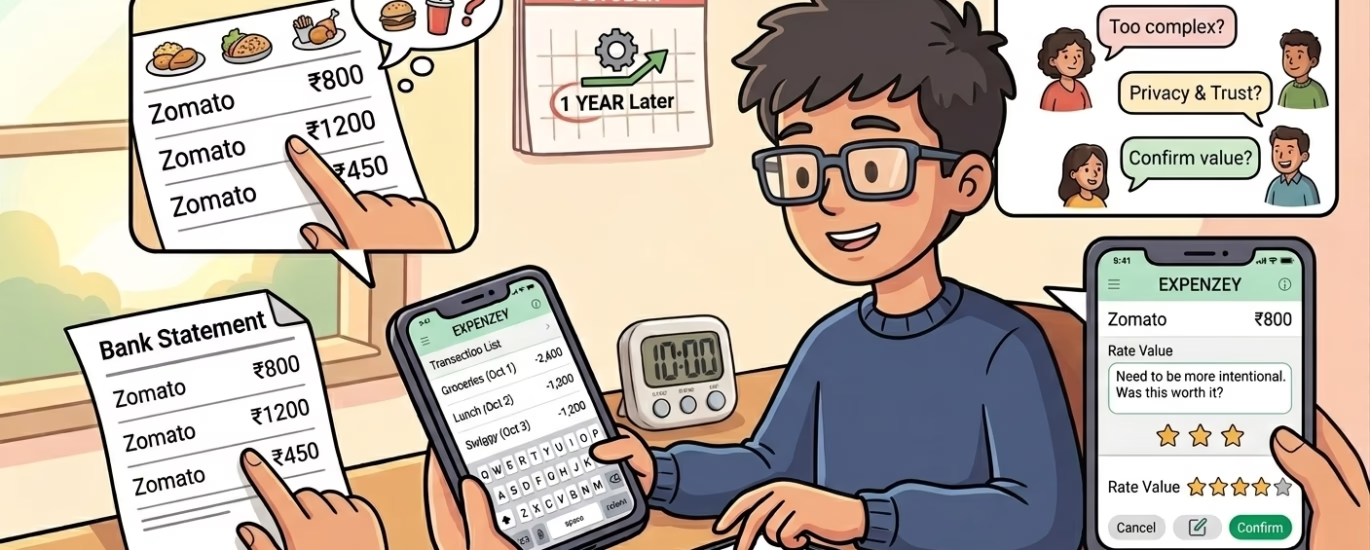
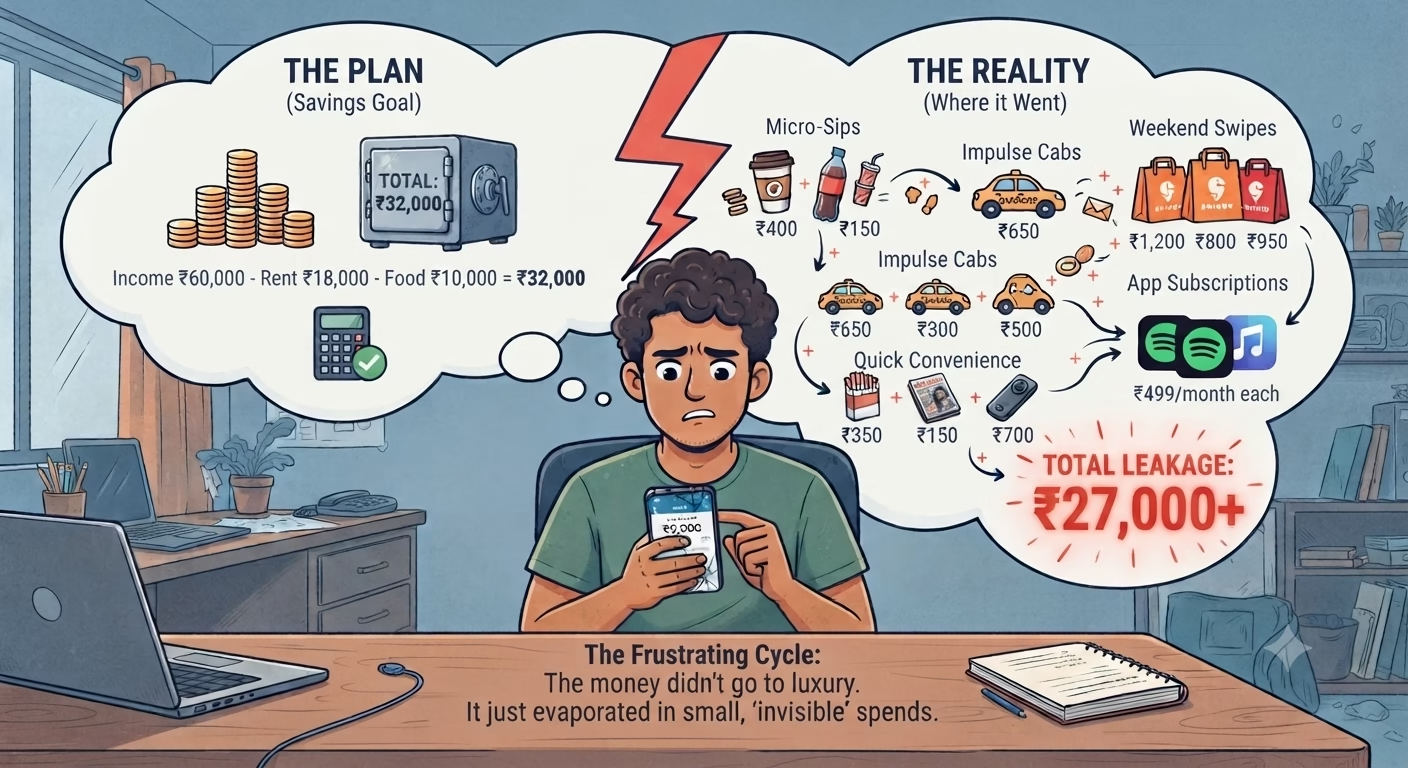
I remember the exact moment i decided to build Expenzey. I was sitting at my desk, looking at my bank statement, and saw three different “Zomato” debits from a single weekend. I had no idea what I’d actually ordered or why I’d ordered it three times. It wasn’t about being broke; it was about that sinking feeling of being a passive observer of my own bank account.
I spent the last year building and refining Expenzey. I wanted to see if I could make a tool that actually helped people, not just one that collected data to sell ads. Along the way, I listened to hundreds of users. And the most common request? “Can you add AI to categorize my expenses automatically?”
I didn’t add AI. Here is why, and what I learned about your relationship with money.
Why everyone wants automation but no one needs it
The demand for AI in finance apps usually comes from a place of exhaustion. We are tired of the mental load of tracking every ₹40 tea or every UPI transaction. People want an app that “just knows” what they spent.
But here is the catch: when an app automates everything, you stop looking at your numbers. You connect your bank, the AI labels your coffee as “Dining,” and you never give it a second thought. You become an even more passive observer. The whole point of tracking is to build awareness, not to create a ledger of things you’ve already forgotten.
The myth of “set it and forget it” finance
If you want to change your spending habits, you have to feel the friction. When you manually log an expense in Expenzey, you are forced to pause for three seconds. You have to think, “Do I really want to record this?”
Those three seconds are where the magic happens. It’s the difference between blindly tapping your phone at a billing counter and actually acknowledging that you just spent money. We found that users who track manually spend 20% less on impulse purchases within the first month. They aren’t using a smarter algorithm; they are just becoming more conscious of their own behavior.
Why labels are better than categories
Most apps force you into rigid categories like “Groceries,” “Utilities,” or “Entertainment.” But life isn’t that neat. You might spend money on a book for work that also doubles as a hobby, or a dinner that was actually a networking event.
When you use rigid categories, you eventually stop tracking because nothing ever fits perfectly. We moved toward a label-based system instead. Labels are fluid. You can tag an expense by the mood you were in, the person you were with, or the project it’s for. It makes the data yours, rather than something a computer dictated for you.
The privacy tax
One of the biggest concerns users shared was the fear of bank-linked apps. Everyone has heard the stories of finance apps scraping SMS data or tracking location just to show a few charts.
When you don’t use AI, you don’t need to harvest personal data. This is why Expenzey is privacy-first. You don’t have to give us your bank credentials or grant us access to your private messages. You log what you want to log, and the data stays on your device. Building this for 12 months taught me that people are actually starving for tools that don’t try to know everything about them.
Overcoming the 15th of the month slump
We all know the cycle. You start the month with big goals, you track everything for two weeks, and by the 15th, you get tired. You miss a few entries, you feel guilty, and you stop entirely.
I learned that the goal shouldn’t be 100% accuracy. The goal is 100% awareness. If you miss a day, don’t sweat it. You don’t need to account for every single rupee to understand your spending patterns. If you know that 40% of your salary disappears into food delivery apps before the third week, you have enough information to make a change. Expenzey is built to be a low-pressure partner in this, not a judge.
The reality of manual effort
I’m not going to lie—manual tracking is work. But so is exercise. And like exercise, the benefit isn’t in the activity itself; it’s in the long-term health it builds.
After 12 months of feedback, I am more convinced than ever that the “easy” way—the AI-driven, automated, passive way—is exactly what keeps us stuck in the same financial loops. If you want to stop wondering where your money went, you have to be the one to tell your app where it went.
Keeping it simple
The best advice I can give you after a year of this journey is to stop searching for the “perfect” app. There is no app that will magically make you wealthy or disciplined. There is only the tool that helps you see your own habits clearly enough to decide which ones you want to change.
Next time you are at the checkout counter, don’t reach for an app that guesses what you spent. Reach for one that asks you to take ownership of the transaction. You might be surprised at how quickly your relationship with your bank balance starts to improve.


Your blog is a beacon of light in the often murky waters of online content. Your thoughtful analysis and insightful commentary never fail to leave a lasting impression. Keep up the amazing work!
Your blog is a breath of fresh air in the often stagnant world of online content. Your thoughtful analysis and insightful commentary never fail to leave a lasting impression. Thank you for sharing your wisdom with us.