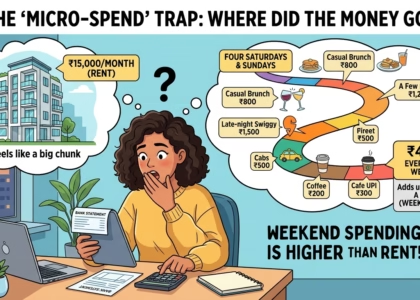

You know that sinking feeling when you check your bank balance on the 18th of the month and wonder how you have so little left? You decide right then and there: “That’s it. From tomorrow, I am tracking every single rupee I spend.”
You download an app, spend an hour creating twenty different categories like “miscellaneous,” “hobbies,” and “subscriptions,” and for three days, you feel like a finance pro. Then, Friday night happens. You order a pizza, grab a drink with friends, and wake up Saturday morning with a slight headache and a pile of receipts you didn’t record.
By Sunday, you’ve stopped opening the app. The guilt sets in, and you delete it.
The problem isn’t your lack of discipline. The problem is that you tried to track too much, too soon. Building a habit is like building a muscle; you don’t start by lifting the heaviest weight in the gym.
If you want to actually start tracking your money without quitting, ignore everything else for the first seven days and focus only on these three things.
1. Your biggest recurring “leak”
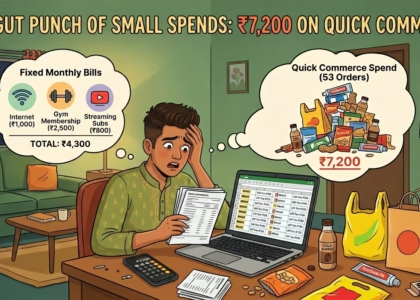
Most of us have one specific area where money bleeds out without us noticing. For you, it might be the daily Swiggy orders, the cabs you take when you’re feeling lazy, or those monthly subscriptions you forgot to cancel.
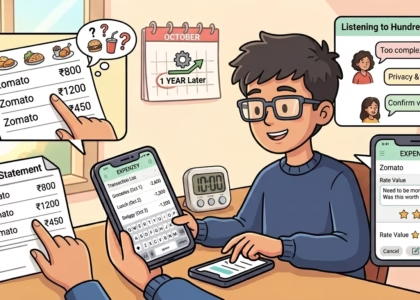
Don’t try to track your groceries, your rent, and your electricity bill all at once. Just pick one thing—your “leak”—and commit to recording every time you spend money on that specific thing for a week. If it’s food delivery, log every Zomato order.
By narrowing your focus to one pain point, you stop the cognitive overload. You aren’t doing “accounting”; you’re just observing one behavior.
2. The mode of payment (upi vs. cash)
We often lose track of money because we treat digital and physical money differently. A UPI transaction feels like “free” money, while a physical 500-rupee note feels like a loss.
For your first week, track where your money is coming from. Are you spending mostly via UPI? Are you pulling out cash and losing track of where it went by the next day? Simply noting “UPI” or “Cash” next to your expenses creates an immediate awareness of your habits.
Expenzey is built for this kind of simplicity. You don’t need to categorize every coffee or link your bank accounts to some intrusive server. You just log the entry, pick your label, and move on. It’s about building the muscle of awareness, not the habit of data entry.
3. The “why” behind the impulse
This is the most important one. When you record an expense, don’t just write down the amount. Write a single word about why you spent it: “bored,” “stressed,” “celebrating,” or “convenience.”
Most of our spending isn’t based on need; it’s based on mood. You ordered that mid-afternoon snack not because you were hungry, but because you were bored at work. You bought that gadget on Amazon because you were stressed.
If you track these three things—your leak, your payment mode, and the “why”—you will learn more about your financial personality in seven days than you would in a year of spreadsheet-based bookkeeping.
Why less is actually more
When you track everything, you start viewing money as a chore. You spend your evenings fighting with your phone, trying to remember if that ₹400 bill was for lunch or a subscription.
When you track only three things, it takes you less than thirty seconds a day. Expenzey encourages this approach because we believe that privacy and simplicity lead to better financial health than complex automation. When you manually log an expense, you are forced to look at it. That split second of pause is where real change happens.
If you make tracking a twenty-minute ordeal, you will eventually hate it. If you make it a thirty-second daily check-in, you’ll stick with it.
Dealing with the “missed day” trap
You are going to miss a day. It’s inevitable. You’ll have a busy day at work, or you’ll go out, have a great time, and completely forget to track your spending.
The biggest mistake people make is trying to “backfill” their data. They sit down and try to reconstruct their spending from three days ago by scrolling through their bank statements. This is the fastest way to quit.
If you miss a day, just let it go. Start fresh the next morning. Your goal in the first week isn’t to have a perfect, 100% accurate financial ledger. Your goal is to get comfortable with the act of paying attention.
How to keep going after week one
Once you’ve successfully tracked these three things for a week, don’t rush to add more. Stick to the same routine for another week.
Once you feel like the habit is part of your morning or evening routine, then—and only then—can you start adding one more variable. Maybe you add “essential vs. non-essential” labels. Or perhaps you start tracking your utility bills.
But for now, keep it small. Keep it private. And keep it simple. Your bank balance on the 18th of next month will thank you.
References
– The psychology of habit formation
– Why manual tracking improves financial awareness
– Understanding impulsive spending triggers