
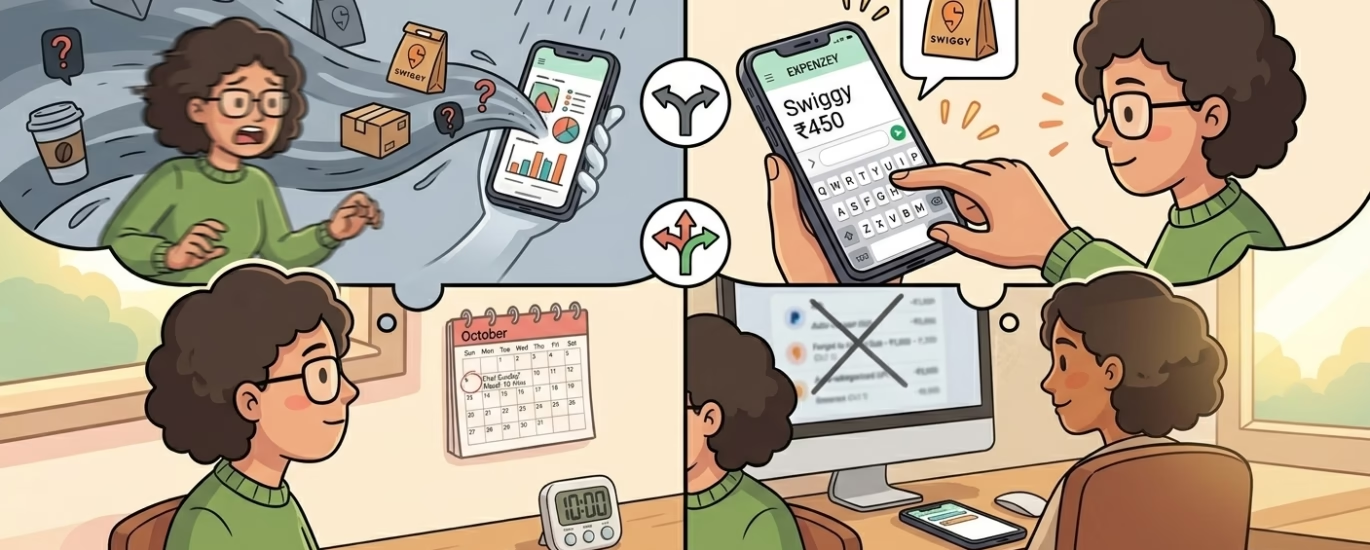
I remember the exact moment I deleted my bank-linked finance app. I was sitting at a cafe, checking a notification that told me exactly how much I’d spent on Zomato that month. It felt efficient. It felt clever. But then, a wave of unease hit me. I realized that some algorithm knew my coffee habits, my subscription renewals, and the exact hour I paid my rent, all while storing my banking credentials on a server I had no control over.
I decided to pull the plug. I switched to manual tracking. No cloud sync, no automatic bank parsing. Just me and my expenses. Here is what happened when I traded “convenience” for total privacy.
The friction is the point
The biggest argument for bank-linked apps is that they take the work out of tracking. You tap a button, it pulls your data, and it categorizes everything. It is seamless.
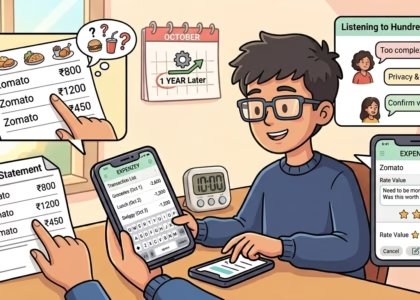
When I started manual tracking, I expected to hate the effort. But within a week, I realized that the “friction” was actually the best part. When you manually punch in “₹450” for that Swiggy order, you aren’t just logging a number. You are physically acknowledging the transaction. That small moment of pause creates a barrier between impulse and reality. It forces you to look at your spending while it is happening, not in an end-of-month report that you probably won’t read anyway.
The silent cost of convenience
We often forget that “convenience” in the digital age is usually a trade-off. When an app connects to your bank, it is constantly scanning your transaction history to provide those nice pie charts.
By stepping away from that, I regained something I didn’t know I was losing: digital peace of mind. I no longer worry about data breaches or third-party companies profiling my spending habits to serve me targeted ads. With a tool like Expenzey, the data stays on my phone. There is no cloud, no server side-tracking, and no invisible handshake between my finances and an ad network. It is just a private ledger that exists for my eyes only.
The myth of accurate tracking
Many people believe that if an app doesn’t track their bank account, it isn’t “accurate.” I used to think this too. But “accuracy” is often a distraction. Do you really need to know the difference between a ₹20 bank fee and a ₹22 bank fee?
Manual tracking helps you focus on the big picture. When I use Expenzey, I label things in ways that actually make sense to me. Instead of rigid categories like “miscellaneous” or “service charges,” I use labels like “stress spending” or “necessary travel.” This helps me understand the why behind my outflows, which is far more important than having a perfectly reconciled bank statement.
What I lost (and why it matters)
Let’s be honest: I did lose things. I lost the ability to see my entire financial history magically appear without me touching a button. I lost the “auto-categorization” feature that saved me thirty seconds a day. There were times, especially after a busy weekend of UPI payments, where I felt lazy and wished I could just sync everything.
But losing that automation actually broke my dependency on the app. I stopped treating my finances like a passive data feed and started treating them like a personal responsibility. The minor inconvenience of opening the app to log a transaction is a small price to pay for the complete absence of surveillance.
Building a habit that lasts
The hardest part about finance apps is that most people stop using them after two weeks. The novelty wears off, the bank syncing fails, or they just get annoyed by the generic, judgmental notifications.
Manual tracking is different because it is a habit, not a feature. By making the process simple and private, I’ve found it easier to stay consistent. I don’t feel like I am being audited by a machine. I feel like I am taking care of my own money. When you use a tool that prioritizes your privacy, you actually want to log your expenses because it feels like a private act of self-care rather than a chore.
Is it worth the effort?
If you value the idea that your financial life should be your own private business, then yes, it is absolutely worth it. The peace of mind that comes from knowing your data is yours alone is worth far more than the few seconds you save by connecting a bank account.
You don’t need a complex system to manage your money. You just need awareness. If you are tired of the constant noise, the data-sharing, and the feeling that you are just a data point in someone else’s model, try going manual for a month. Grab a notebook or a private app, and start tracking. You might be surprised by how much more in control you feel when you are the only one with access to your financial story.


Makaleniz açıklayıcı yararlı anlaşılır olmuş ellerinize sağlık